


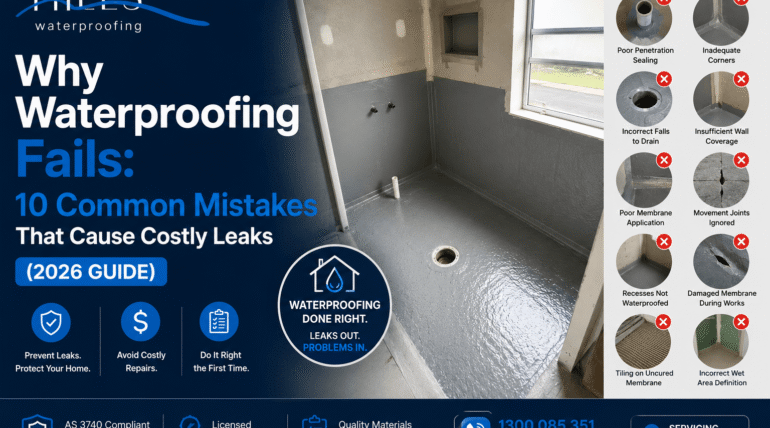
Why Waterproofing Fails: 10 Common Mistakes That Cause Costly Leaks
Short Answer:
Most waterproofing failures are caused by poor installation, incorrect preparation, drainage issues, or the use of unsuitable materials—not the waterproofing product itself. In Sydney, failed waterproofing can result in leaking bathrooms, balconies, roofs, mould growth, and expensive structural repairs. Understanding the common causes of waterproofing failure can help homeowners prevent costly damage and know when to arrange a professional waterproofing inspection.
Key Takeaways
- Most waterproofing failures are preventable.
- Poor workmanship is the leading cause.
- Waterproofing must comply with Australian Standards.
- Drainage is just as important as the waterproofing membrane.
- Early inspections can save thousands in repair costs.
Waterproofing is one of the most important parts of any bathroom renovation, balcony construction, rooftop project, or wet area installation.
When it’s done properly, it protects your home for many years.
When it’s done incorrectly, it can lead to:
- leaking bathrooms
- leaking balconies
- roof leaks
- mould
- structural damage
- expensive rectification work
At Hills Waterproofing, one of the most common questions we hear is:
“Why did my waterproofing fail when it was only done a few years ago?”
The answer is often not the waterproofing membrane itself—it is usually the installation process.
Here are the ten most common reasons waterproofing systems fail in Sydney homes.
1. Poor Surface Preparation
Before waterproofing is applied, the substrate must be:
- clean
- dry
- stable
- free from dust and contaminants
If the surface is poorly prepared, the membrane may not bond correctly.
This is one of the leading causes of early waterproofing failure.
2. Incorrect Waterproofing Membrane Application
Different waterproofing products require:
- specific thickness
- drying times
- multiple coats
- reinforcement at joints
Applying the membrane too thinly or rushing the process significantly reduces its performance.
3. Waterproofing That Doesn’t Comply with Australian Standards
Waterproofing in Australia should comply with:
- AS3740 – Domestic Wet Areas
- AS4654 – External Above-Ground Waterproofing
Non-compliant waterproofing often results in premature failure.
👉 Learn more in our guide to Bathroom Waterproofing Regulations NSW.
4. Poor Drainage Design
Waterproofing alone cannot compensate for poor drainage.
If water constantly pools on a balcony or rooftop, the waterproofing membrane remains under constant pressure.
Common drainage problems include:
- incorrect falls
- blocked outlets
- ponding water
👉 Read our guide on Balcony Drainage Regulations NSW.
5. Structural Movement
Buildings naturally expand and contract.
Without properly detailed movement joints, waterproofing membranes can crack over time.
This is especially common on:
- balconies
- rooftops
- suspended slabs
6. Cracked Tiles and Grout
Tiles are not waterproof.
When grout cracks or tiles become loose, water can reach the membrane underneath.
Ignoring damaged tiles often leads to hidden waterproofing failures.
7. Using the Wrong Waterproofing System
Every project requires the correct waterproofing solution.
Bathrooms, balconies, rooftops, and retaining walls all have different waterproofing requirements.
Using an unsuitable product can dramatically shorten the lifespan of the waterproofing.
8. Waterproofing Over Existing Moisture
Applying a waterproofing membrane over damp or contaminated surfaces prevents proper adhesion.
Over time, the membrane can separate from the substrate, allowing water to penetrate.
9. Poor Detailing Around Penetrations
Many waterproofing failures occur around:
- floor wastes
- shower mixers
- pipe penetrations
- door thresholds
- wall junctions
These areas require additional reinforcement and careful detailing.
10. No Waterproofing Inspection Before Tiling
One of the biggest mistakes is installing tiles before checking that the waterproofing has been completed correctly.
A professional inspection can identify defects before they are hidden beneath the finished surface.
This is much cheaper than removing tiles later.
What Are the Signs Waterproofing Has Failed?
Look for:
- water stains
- mould
- damp smells
- bubbling paint
- loose tiles
- cracked grout
- water leaking into adjacent rooms
- ceiling stains below bathrooms or balconies
These are all signs that your waterproofing system may no longer be performing as intended.
Can Waterproofing Fail Even If It’s New?
Yes.
Unfortunately, we regularly inspect bathrooms and balconies where waterproofing has failed within just a few years.
This is usually due to:
- poor workmanship
- rushed construction
- non-compliant installation
- incorrect products
Quality installation is just as important as the membrane itself.
How Can You Prevent Waterproofing Failure?
To maximise the lifespan of your waterproofing:
✔ Hire experienced waterproofing specialists.
✔ Ensure work complies with Australian Standards.
✔ Address drainage issues.
✔ Repair cracked grout and tiles promptly.
✔ Arrange inspections before problems become major repairs.
Why Choose Hills Waterproofing?
Hills Waterproofing provides professional waterproofing services across Sydney, including:
- bathroom waterproofing
- balcony waterproofing
- rooftop waterproofing
- waterproofing inspections
- leak detection
- waterproofing repairs
We focus on identifying the root cause of leaks and delivering long-term waterproofing solutions that comply with Australian Standards.
Final Thoughts
Most waterproofing failures are preventable.
By understanding the common causes and addressing issues early, homeowners can avoid expensive repairs, insurance disputes, and structural damage.
If you suspect your waterproofing has failed, don’t wait for the damage to worsen.
A professional waterproofing inspection can identify the problem before it becomes a major renovation.
Need Professional Waterproofing in Sydney?
Whether you’re renovating a bathroom, repairing a leaking balcony, or investigating water damage, Hills Waterproofing can help.
Contact our experienced team today to arrange a waterproofing inspection or request a quote.
FAQ
❓ What is the most common cause of waterproofing failure?
Poor workmanship and incorrect installation are the leading causes of waterproofing failure in bathrooms, balconies, and rooftops.
❓ Can waterproofing fail after only a few years?
Yes. If waterproofing was not installed correctly or does not comply with Australian Standards, it may fail much sooner than expected.
❓ Are cracked tiles a sign of waterproofing failure?
Not always, but cracked tiles and grout can allow water to reach the waterproofing membrane, increasing the risk of failure.
❓ How can I tell if my waterproofing has failed?
Common signs include water stains, mould, damp smells, bubbling paint, loose tiles, and water leaking into adjoining rooms.
❓ Can waterproofing failure be repaired?
Yes. The repair method depends on the cause and extent of the damage. A professional waterproofing inspection is the best way to determine the appropriate solution.
📞 Call us at 0410 570 721
📧 Email: [email protected]
Related Services from Hills Waterproofing
CHECK OUR 5⭐ GOOGLE REVIWE
CHECK OUR 5⭐ GOOGLE REVIWE
GET A FREE QUOTATION
GET A FREE QUOTATION

