
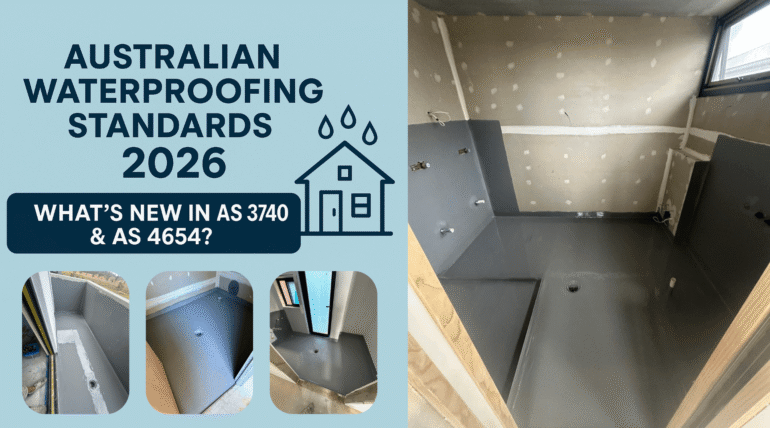
Australian Waterproofing Standards 2026 – What’s New in AS 3740 & AS 4654?
Waterproofing failures continue to be one of Sydney’s most expensive and common home repair issues — especially in bathrooms, balconies, and rooftop areas. Because of this, the Australian Building Codes Board has introduced 2026 updates to the AS 3740 and AS 4654 standards.
These updates aim to reduce waterproofing defects, strengthen compliance requirements, and ensure both residential and commercial buildings across Australia are better protected from leaks and moisture.
This 2026 guide explains the changes in clear, simple language, so you know exactly what to expect when renovating or repairing your Sydney home.
Why the Waterproofing Standards Were Updated in 2026?
The 2026 updates were created to reduce the ongoing waterproofing failures commonly seen in Sydney properties, including:
-
Leaking balconies in new apartment buildings
-
Poor or incomplete shower sealing
-
Incorrect screed falls and drainage
-
Use of non-compliant membranes
-
Insufficient membrane thickness
-
DIY waterproofing attempts
-
Inconsistent compliance documentation
The 2026 standard updates aim to create clearer, more enforceable requirements — and stronger accountability for waterproofing installers.
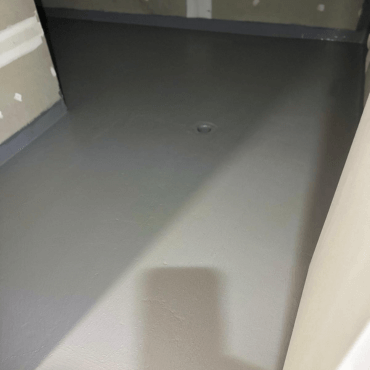
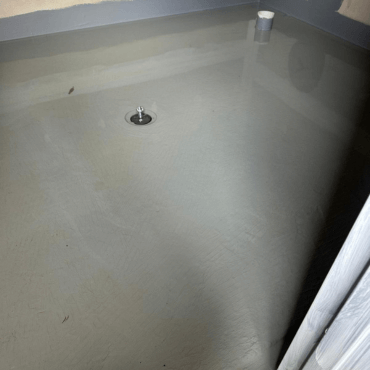

What’s New in AS 3740 (Internal Wet Areas) — 2026 Update
1. Stricter membrane thickness measurement (mandatory)
Installers must now provide documented membrane thickness readings at all junctions and penetrations.
2. Full wall waterproofing recommended for most modern bathrooms
Small apartments, units, and high-moisture homes should receive full-wall waterproofing for long-term protection.
3. Stronger junction sealing rules
All corners, junctions, and penetrations must now use reinforced banding or a fully compatible sealing system.
4. Increased minimum waterproofing height for showers
Shower walls must be waterproofed a minimum of 1,800 mm (higher than old practices).
5. Mandatory installer documentation
Installers must now supply written proof of:
-
Products used
-
Methods of application
-
Coverage rate
-
Curing details
-
Membrane thickness
This documentation must be provided to homeowners and kept for record.
What’s New in AS 4654 (External Areas) — 2026 Update
These updates apply to:
✔ Balconies
✔ Rooftops
✔ Terraces
✔ Planter boxes
✔ Podiums and external wet areas
1. Updated drainage fall requirements (now strictly enforced)
Balconies and rooftops must have a minimum 1:100 slope, fully documented by the installer.
2. New UV-exposure testing requirements
Only membranes that meet the 2026 UV durability test can be used externally.
3. Mandatory 24-hour flood testing before tiling
Flood tests must now be completed and recorded before laying tiles in any external area.
4. Stronger termination and edge protection rules
Membranes must extend under all door tracks, thresholds, facades, and wall junctions.
5. Double-layer membrane system for high-risk buildings
Buildings in high-exposure zones (Inner West, Parramatta, Ryde, CBD, Northern Beaches) must install a two-layer system to meet 2026 compliance.
Waterproofing Compliance Checklist for Sydney Homeowners (2026 Update)
✔ Is your waterproofing contractor licensed (mandatory in NSW)?
✔ Did the quote clearly state AS 3740 or AS 4654 compliance?
✔ Did you receive membrane thickness documentation?
✔ Was a 24-hour flood test completed (balconies/roofs)?
✔ Are the products Australian-certified for 2026 standards?
✔ Did they issue a Waterproofing Certificate?
This checklist can prevent most future leaks and insurance problems.
Common Mistakes That Fail Waterproofing Standards (Based on Real Sydney Cases)
-
Using cheap DIY rollers
-
Not waterproofing full walls in small bathrooms
-
Incorrect screed falls
-
Failing to seal drainage penetrations
-
Using internal membranes on external balconies
-
Tiling too early (before cure time)
-
Forgetting to apply primer
-
No expansion joints
Hills Waterproofing frequently repairs failed installations caused by non-compliant waterproofing — often costing homeowners thousands.
Frequently Asked Questions (Updated for 2026)
Q: Are the 2026 waterproofing changes legally enforceable?
Yes. NSW Fair Trading enforces waterproofing regulations and licensing.
Q: Do I need two coats or three?
Depends entirely on the membrane system — documentation must show correct coverage.
Q: How long should external waterproofing last?
5–10 years depending on UV exposure, drainage, and maintenance.
Q: How long does waterproofing take from start to finish?
Usually 2–4 days, including curing time and flood testing.
Final Thoughts — Protect Your Home With 2026-Compliant Waterproofing
With stricter and clearer rules in 2026, Australian waterproofing standards are now more protective and enforceable than ever. For homeowners, this means:
✔ No leaks
✔ Less mould
✔ Better long-term durability
✔ No failed inspections
✔ No rejected insurance claims
Choosing a licensed, experienced, and standards-compliant waterproofing contractor is the most important step you can take.
Call To Action
💧 Need compliant waterproofing in Sydney?
Hills Waterproofing is fully licensed, insured, and compliant with all 2026 requirements under AS 3740 & AS 4654.
📞 Call us at 0410 570 721
📧 Email: info@hillswaterproofing.com.au
