


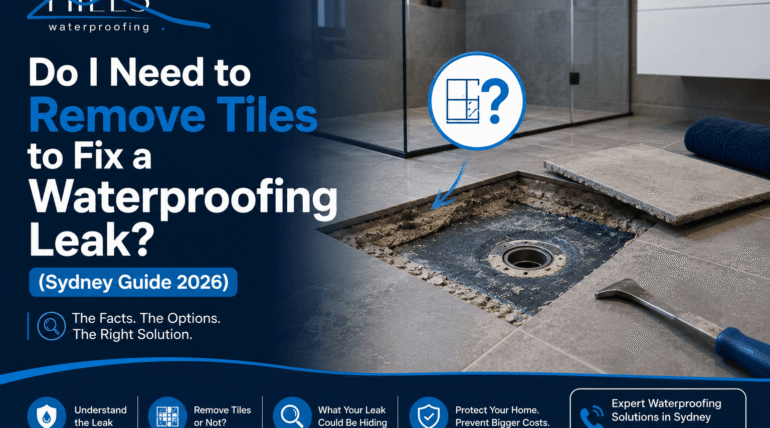
Do I Need to Remove Tiles to Fix a Waterproofing Leak? (Sydney Guide 2026)
Short Answer
Whether you need to remove tiles to fix a waterproofing leak depends on the cause and severity of the problem. Minor leaks can often be repaired using non-invasive waterproofing techniques, while major membrane failures typically require tile removal. A professional waterproofing inspection is the best way to determine the most cost-effective and compliant solution for Sydney homes.
Discovering a waterproofing leak is stressful enough—but many homeowners have one question before they even call a contractor:
“Do I really need to remove all the tiles to fix the waterproofing?”
The answer depends on what’s causing the leak.
In some situations, a simple repair may solve the issue. In others, removing the tiles is the only way to permanently repair a failed waterproofing system.
In this guide, we’ll explain when tiles need to be removed, when they don’t, and how to avoid paying for unnecessary work.
Why Waterproofing Leaks Happen
Bathroom and balcony waterproofing systems are designed to stop water from reaching the building structure.
However, waterproofing can fail because of:
- ageing waterproofing membranes
- poor workmanship
- cracked substrates
- building movement
- incorrect drainage
- non-compliant waterproofing installation
The important thing to understand is that the visible leak is often not the actual source of the problem.
Do Waterproofing Repairs Always Require Tile Removal?
Not always.
Whether tiles need to be removed depends on where the leak originates.
A professional waterproofing inspection should always be carried out before any repairs begin.
When Tiles Usually DON’T Need to Be Removed
Some leaks can be repaired without removing tiles.
These include:
Damaged Silicone
Old silicone around showers, baths or sinks may allow water to escape.
Replacing silicone is usually straightforward.
Cracked Grout
Minor grout deterioration can sometimes allow water to penetrate.
Regrouting may solve the problem if the waterproofing membrane underneath remains intact.
Plumbing Leaks
If the leak is caused by:
- a pipe
- tap fitting
- shower mixer
the waterproofing system may still be functioning correctly.
Minor Maintenance Issues
Loose fixtures or failed seals can often be repaired without disturbing the tiled surface.
When Tiles DO Need to Be Removed
Unfortunately, tile removal is necessary in many waterproofing repairs.
The Waterproofing Membrane Has Failed
The waterproofing membrane sits beneath the tiles.
If the membrane has deteriorated or was installed incorrectly, there is no permanent way to repair it from the surface.
The tiles usually need to be removed so a new waterproofing system can be installed.
Water Is Trapped Beneath the Tiles
If moisture has accumulated beneath the tiled surface, the area must be allowed to dry before new waterproofing is applied.
Structural Damage Is Present
If water has damaged:
- screed
- substrate
- timber framing
- concrete
repairs beneath the tiled surface become necessary.
Previous Repairs Have Failed
Many homeowners have already tried:
- resealing
- regrouting
- surface coatings
If leaks continue after these repairs, the problem usually lies beneath the tiles.
Why Surface Sealers Rarely Solve Waterproofing Problems
Many products claim they can stop leaks without removing tiles.
These products may reduce water penetration temporarily, but they do not repair a failed waterproofing membrane.
If the waterproofing system underneath has failed, water will eventually find another path.
How Do Waterproofing Specialists Find the Real Cause?
At Hills Waterproofing, every repair begins with a detailed inspection.
Our inspection process includes:
- visual assessment
- moisture investigation
- drainage assessment
- leak source identification
- waterproofing condition assessment
This helps avoid unnecessary demolition and ensures repairs address the actual problem.
Can Waterproofing Be Repaired Without Renovating the Entire Bathroom?
Sometimes, yes.
If the damaged waterproofing is limited to a specific area, localised repairs may be possible.
However, if the waterproofing has failed throughout the bathroom or balcony, replacing the complete waterproofing system is often the safest long-term solution.
How Much Does Waterproofing Repair Cost?
Costs vary depending on:
- whether tiles need removing
- extent of water damage
- membrane condition
- accessibility
- room size
Minor repairs are significantly cheaper than complete waterproofing replacement.
👉 Read our Waterproofing Cost Sydney Guide for a detailed pricing breakdown.
How to Avoid Major Waterproofing Repairs
The best way to avoid expensive tile removal is early detection.
Arrange a waterproofing inspection if you notice:
- damp smells
- loose tiles
- mould
- bubbling paint
- water stains
- leaking ceilings
Small problems are usually far less expensive to repair.
Why Choose Hills Waterproofing?
Hills Waterproofing provides professional waterproofing inspections and repairs throughout Sydney.
Our experienced team specialises in:
- bathroom waterproofing
- balcony waterproofing
- leaking shower repairs
- waterproofing inspections
- leak detection
- waterproofing membrane replacement
We focus on finding the true source of the problem before recommending repairs.
Final Thoughts
Not every waterproofing leak requires removing tiles—but many do.
The only reliable way to know is through a professional inspection.
Repairing the correct problem the first time is always more affordable than repeated temporary fixes.
If you’re dealing with a waterproofing leak in Sydney, Hills Waterproofing can identify the cause and recommend the most effective long-term solution.
Need Waterproofing Repairs in Sydney?
Whether you’re dealing with a leaking shower, bathroom, balcony, or rooftop, Hills Waterproofing can help.
Contact our team today to arrange a professional waterproofing inspection and receive expert advice before starting repairs.
FAQ
❓ Can waterproofing be repaired without removing tiles?
Yes, but only in certain situations. Minor issues such as damaged silicone or grout may be repaired without removing tiles. If the waterproofing membrane has failed, tile removal is usually required.
❓ How do I know if my waterproofing membrane has failed?
Common signs include persistent leaks, mould, water stains, loose tiles, bubbling paint, and damp smells.
❓ Is regrouting enough to stop a leaking shower?
Only if the waterproofing membrane underneath is still intact. If the membrane has failed, regrouting alone will not permanently solve the problem.
❓ Can waterproofing be repaired locally?
In some cases, yes. If the damage is isolated, localised repairs may be possible. A professional inspection is required to determine the best solution.
❓ How much does waterproofing repair cost if tiles need to be removed?
Costs depend on the size of the area, the extent of the damage, and the waterproofing system required. Early repairs are generally much less expensive than full renovations.
📞 Call us at 0410 570 721
📧 Email: [email protected]
Related Services from Hills Waterproofing
CHECK OUR 5⭐ GOOGLE REVIWE
CHECK OUR 5⭐ GOOGLE REVIWE
GET A FREE QUOTATION
GET A FREE QUOTATION

