

Balcony Waterproofing Requirements NSW 2026: Laws, Standards & Compliance
Last Updated: August 2026
A leaking balcony can cause much more than damaged tiles.
When balcony waterproofing fails, water can penetrate into walls, ceilings, concrete, adjoining rooms and apartments below. What begins as a small leak can eventually become a significant remedial waterproofing problem.
For Sydney homeowners, builders, strata managers and property owners, understanding the balcony waterproofing requirements in NSW is therefore important before constructing, renovating or repairing a balcony.
In 2026, balcony waterproofing may need to satisfy requirements under the National Construction Code (NCC), relevant Australian Standards, NSW building legislation, project specifications and waterproofing-system manufacturer requirements.
This guide from Hills Waterproofing explains the key balcony waterproofing requirements, common compliance problems, typical 2026 costs and warning signs that your balcony waterproofing may have failed.
Short Answer: What Are the Balcony Waterproofing Requirements in NSW?
Balcony waterproofing in NSW must be designed and installed according to the requirements applicable to the particular building and waterproofing system. External above-ground waterproofing commonly involves the AS 4654 series, together with relevant National Construction Code requirements.
A compliant balcony waterproofing system needs to address more than the membrane itself. Substrate preparation, drainage, falls, perimeter detailing, door thresholds, penetrations, joints and membrane termination can all influence waterproofing performance.
Requirements can vary according to the building classification and scope of work, so the applicable specifications should be confirmed for each project.
Is Balcony Waterproofing Mandatory in NSW?
Where a balcony or external area requires protection from water penetration under the applicable building requirements, the waterproofing system needs to satisfy the relevant regulatory and technical requirements.
The exact obligations depend on factors such as:
- building classification
- balcony design
- construction method
- waterproofing system
- whether the work is new or remedial
- applicable NCC provisions
- project specifications
- relevant Australian Standards
For this reason, balcony waterproofing shouldn’t be approached as simply applying a waterproof membrane beneath tiles.
It needs to function as a complete system.
What Australian Standard Applies to Balcony Waterproofing?
One of the key standards associated with external above-ground waterproofing is the AS 4654 series – Waterproofing membranes for external above-ground use.
It covers aspects associated with waterproofing membrane systems used in external above-ground applications.
Balconies, terraces, podiums and certain rooftop areas can fall within this type of waterproofing application.
The applicable requirements should be considered together with the NCC, project documentation, manufacturer installation instructions and any other requirements relevant to the particular building.
AS 3740 vs AS 4654: What’s the Difference?
This is an area that can cause confusion for homeowners.
AS 3740
AS 3740 relates to the waterproofing of domestic wet areas.
It is commonly associated with internal areas such as:
- bathrooms
- showers
- laundries
- other domestic wet areas
AS 4654
The AS 4654 series relates to waterproofing membranes for external above-ground use.
It is commonly relevant to areas such as:
- balconies
- terraces
- podiums
- certain external decks
- some above-ground roof areas
So while bathroom and balcony waterproofing share some waterproofing principles, they aren’t necessarily governed by exactly the same technical requirements.
Key Balcony Waterproofing Requirements
A successful balcony waterproofing system involves multiple components working together.
Here are some of the most important areas that need to be considered.
1. Correct Substrate Preparation
The waterproofing membrane is only as reliable as the surface beneath it.
Before membrane installation, the substrate needs to be suitable for the specified waterproofing system.
Depending on site conditions, preparation may involve addressing:
- cracks
- dust and contamination
- uneven surfaces
- loose materials
- existing coatings
- damaged substrate
- problematic junctions
Applying a membrane over an unsuitable surface can compromise adhesion and long-term waterproofing performance.
2. Appropriate Falls and Drainage
Water shouldn’t be allowed to sit unnecessarily on a balcony.
The balcony system needs to manage rainfall and direct water toward the appropriate drainage points.
Poor drainage can contribute to:
- ponding water
- staining
- deterioration
- pressure on waterproofing details
- water ingress
- premature waterproofing problems
Simply installing a waterproof membrane doesn’t correct an incorrectly designed or constructed drainage system.
3. Floor-to-Wall Junctions
The junction between horizontal and vertical surfaces is one of the most critical areas in balcony waterproofing.
Water can find its way through small weaknesses around these transitions.
Correct detailing of perimeter junctions and changes of plane is therefore an important part of the waterproofing system.
4. Balcony Door Thresholds
Door thresholds are another vulnerable location.
Balcony waterproofing needs to integrate appropriately with doors, frames, thresholds and surrounding building elements.
Poor detailing in this area can allow wind-driven rain or accumulated water to enter the property.
Threshold design should therefore be considered as part of the overall balcony and drainage design—not as an isolated waterproofing detail.
5. Drains and Outlets
Drainage penetrations are critical waterproofing locations.
The membrane system needs to integrate correctly with the drainage components specified for the project.
Problems around balcony drains can result in water entering underneath the membrane or surrounding building materials.
6. Penetrations
Balcony penetrations may include items such as:
- posts
- pipes
- drainage components
- fixtures
- services
- balustrade-related penetrations
Every penetration introduces another potential weak point in the waterproofing system.
These areas require appropriate detailing for the selected membrane and construction system.
7. Movement and Joints
Buildings move.
Temperature changes, structural movement and material expansion can place stress on balcony systems.
Movement joints and other relevant construction joints therefore need to be treated according to the project design and waterproofing-system requirements.
Covering a movement joint with membrane without appropriate detailing can create a future failure point.
8. Membrane Terminations and Upturns
Waterproofing membranes don’t simply stop at the edge of the tiled floor.
How the membrane terminates and interfaces with walls, thresholds, drainage points and other construction elements is critical.
Upturns and perimeter details need to follow the requirements applicable to the project rather than relying on an arbitrary universal measurement.
This is particularly important because different balcony configurations can require different detailing.
Balcony Waterproofing Compliance Checklist
Before tiling or covering a newly waterproofed balcony, the following should be considered:
| Item | Why It Matters |
|---|---|
| Substrate properly prepared | Helps membrane adhesion and performance |
| Cracks and defects addressed | Reduces potential failure points |
| Drainage considered | Helps prevent water accumulation |
| Falls appropriately designed/constructed | Directs water toward drainage |
| Perimeter junctions detailed | Protects changes between surfaces |
| Penetrations treated | Helps prevent localised water ingress |
| Drains integrated with waterproofing | Critical connection in the system |
| Thresholds correctly detailed | Reduces risk of water entering internally |
| Joints appropriately treated | Allows for relevant building movement |
| Correct membrane system used | Ensures suitability for the application |
| Manufacturer requirements followed | Important for system performance |
| Applicable project documentation checked | Helps ensure regulatory compliance |
A checklist is useful, but it doesn’t replace the project-specific waterproofing design or applicable regulatory requirements.
Does Balcony Waterproofing Need to Be Done by a Licensed Waterproofer in NSW?
Waterproofing is recognised as trade work in NSW.
For residential building and trade work, NSW Government guidance states that a contractor licence is required where the work is valued at more than $5,000 in labour and materials, including GST.
Licensing requirements depend on the nature and value of the work, so property owners should verify the contractor’s credentials and the requirements applying to their particular project.
For certain regulated buildings, additional practitioner, design and documentation requirements may also apply.
Apartment and Strata Balcony Waterproofing Requirements
Balcony waterproofing can become more complicated in apartment and strata buildings.
A leaking balcony may affect:
- the individual lot
- common property
- the apartment below
- external façades
- structural elements
- adjoining internal areas
Responsibility for repairs depends on the specific circumstances, building documentation, strata plan and cause/location of the defect.
For regulated building classes in NSW, waterproofing can also fall within the Design and Building Practitioners framework.
Certain work involving Class 2, 3 and 9c buildings is subject to additional requirements around regulated designs, declarations and registered practitioners.
If you’re dealing with an apartment balcony leak, it is important to establish both the source of the leak and who is responsible for the relevant building element before major remedial work begins.
How Do You Know if Balcony Waterproofing Has Failed?
Waterproofing failure isn’t always visible on the balcony surface.
Common warning signs include:
- water stains on ceilings below
- peeling or bubbling paint
- damp internal walls
- mould or musty smells
- efflorescence
- cracked tiles or grout
- persistent water around drainage points
- leaking around balcony doors
- deterioration underneath the balcony
- water appearing after heavy rain
If these signs appear repeatedly, simply resealing grout may not address the underlying problem.
Why Balcony Waterproofing Fails
There isn’t one single cause of balcony waterproofing failure.
Common contributing factors can include:
Poor Substrate Preparation
A membrane applied to dusty, contaminated, cracked or unsuitable surfaces may not perform as intended.
Incorrect Drainage
If water isn’t effectively directed away, prolonged ponding can expose weaknesses in the balcony system.
Poor Junction Detailing
Corners, perimeter junctions, drains and penetrations are common locations for problems.
Incorrect Membrane Application
Insufficient coverage, incompatible products or failure to follow manufacturer requirements can compromise the waterproofing system.
Building Movement
Movement can cause cracking or place stress on vulnerable waterproofing details.
Threshold Problems
Incorrect detailing around balcony doors can allow water to enter the internal building area.
Damage After Waterproofing
Waterproofing can also be damaged by later trades before tiles or other finishes are installed.
This is why protecting the completed membrane during construction is important.
Can You Waterproof Over Existing Balcony Tiles?
Sometimes—but it isn’t automatically the correct solution.
A waterproofing-over-tiles system may be appropriate in certain remedial situations, depending on:
- condition of the existing tiles
- adhesion of the existing finishes
- drainage
- falls
- threshold heights
- location of the leak
- condition of the underlying structure
- selected waterproofing system
However, if the underlying waterproof membrane has significantly failed, there are substrate problems or water has already caused damage underneath the tiles, removing the existing finishes may be necessary.
The correct approach should be based on the actual cause of the leak.
Do Balcony Tiles Need to Be Removed to Fix a Leak?
Not necessarily.
Some balcony leaks can potentially be addressed using targeted remedial methods without removing every tile.
However, where the waterproofing membrane itself has failed extensively, removing the tiles may be required to access the substrate and properly reinstate the waterproofing system.
The important point is to diagnose the cause before choosing the repair method.
A surface treatment shouldn’t be used simply because it is cheaper if the actual failure is underneath the tiles.
Balcony Waterproofing Cost Sydney 2026
Balcony waterproofing prices vary considerably depending on whether the work involves a new balcony or an existing waterproofing failure.
Indicative Sydney budgeting ranges include:
| Balcony Project | Typical 2026 Cost | Indicative Rate |
| Small balcony | $1,200–$1,800+ | $80–$120+ per m² |
| Standard residential balcony | $1,500–$3,000+ | $90–$150+ per m² |
| Large balcony / terrace | $3,000–$5,500+ | $100–$160+ per m² |
| Rooftop balcony / complex external area | $3,500–$7,500+ | $120–$180+ per m² |
| Remedial balcony waterproofing | $3,000–$10,000+ | Project dependent |
These figures are indicative budgeting ranges rather than fixed quotations.
The final cost can be affected by:
- balcony size
- substrate condition
- tile removal
- drainage
- falls
- accessibility
- perimeter detailing
- door thresholds
- penetrations
- membrane system
- existing water damage
- repairs required before waterproofing
For a broader comparison of bathrooms, balconies, rooftops and remedial projects, see our Waterproofing Cost Sydney 2026: Price Per m² Guide.
Real Sydney Balcony Waterproofing Projects
Generic waterproofing advice is useful, but actual projects demonstrate how different site conditions affect the waterproofing approach.
Hills Waterproofing carries out waterproofing projects across Sydney, including the Hills District and surrounding suburbs.
Real Project: Balcony Waterproofing in Rouse Hill
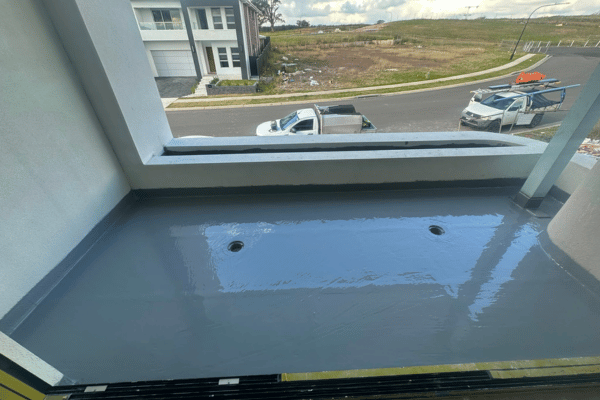
At this residential project in Rouse Hill, NSW, Hills Waterproofing carried out waterproofing works as part of the property’s external waterproofing requirements.
Before membrane installation, attention was given to the condition of the substrate and critical areas of the project.
What This Project Demonstrates
External waterproofing requires more than coating the main balcony floor.
Junctions, drainage areas, penetrations and transitions between building elements can all influence the performance of the completed system.
Real Project: Waterproofing in Castle Hill
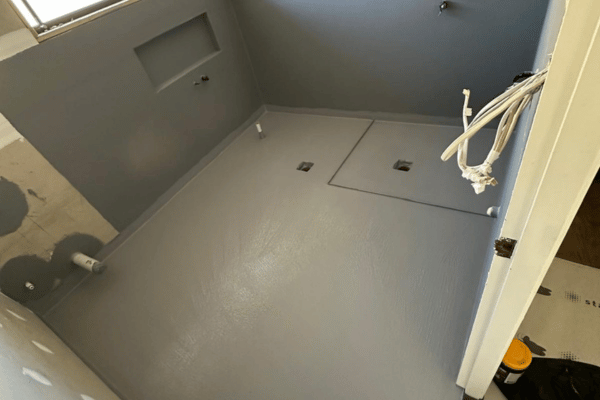
This Castle Hill waterproofing project demonstrates the importance of preparing the area before membrane application.
Substrate condition and project detailing need to be considered before waterproofing begins because defects underneath the membrane can affect the completed system.
Project Insight
Even when two balconies appear similar in size, the waterproofing scope can be very different.
Drainage, thresholds, penetrations, junctions and substrate preparation can significantly change the amount of work required.
Real Project: Waterproofing in Box Hill
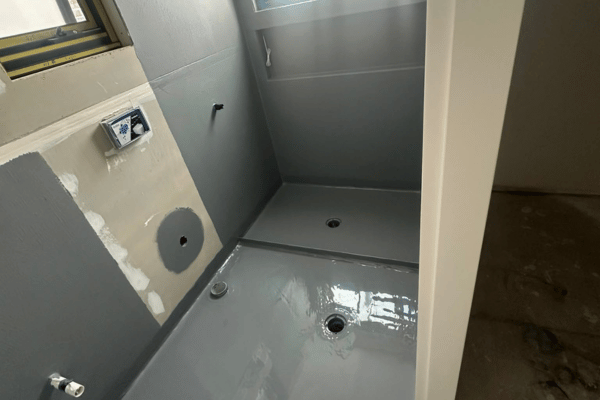
Hills Waterproofing also carries out residential waterproofing projects in Box Hill and Sydney’s growing north-west.
New homes and renovations provide an opportunity to address waterproofing details before finishes are installed.
What This Project Demonstrates
Good waterproofing starts before the membrane is applied.
Substrate preparation, junction detailing, penetrations and integration with surrounding building elements are all important parts of the overall waterproofing system.
What Our Sydney Projects Have Taught Us About Balcony Waterproofing
One of the most important lessons from waterproofing projects is that the visible leak isn’t always the original point of water entry.
Water can move through or behind building materials before becoming visible somewhere else.
For example, water appearing on the ceiling below a balcony doesn’t automatically mean the membrane has failed directly above that exact spot.
Potential sources can involve drainage areas, thresholds, penetrations, perimeter junctions or other parts of the external envelope.
That’s why identifying the likely cause of water ingress before carrying out remedial work is so important.
New Balcony Waterproofing vs Remedial Waterproofing
| New Balcony Waterproofing | Remedial Balcony Waterproofing |
| Substrate usually accessible | Existing tiles may conceal the membrane |
| Easier to coordinate drainage | Existing drainage may need investigation |
| Details can be addressed before finishes | Existing defects may already be present |
| More predictable scope | Hidden damage may be discovered |
| Integrated into construction | May require demolition and reinstatement |
| Generally easier to budget | Final cost can vary substantially |
Correct waterproofing during construction can help reduce the risk of expensive remedial repairs later.
What Should You Ask a Balcony Waterproofer?
Before accepting a quotation, ask:
- What waterproofing system will be used?
- What substrate preparation is included?
- How will drains and penetrations be treated?
- How will perimeter junctions be detailed?
- How are door thresholds being addressed?
- Are existing cracks or defects included in the scope?
- What happens if hidden damage is discovered?
- What warranty applies to the particular work?
- What documentation will be provided?
- Are there any works required before waterproofing can begin?
Don’t compare quotes using price alone.
Two waterproofing quotations can have significantly different scopes.
Balcony Waterproofing FAQs
What standard applies to balcony waterproofing in NSW?
External above-ground waterproofing is commonly associated with the AS 4654 series. The exact requirements for a project also depend on the NCC, building classification, design documentation, waterproofing system and other applicable requirements.
How much does balcony waterproofing cost in Sydney?
In 2026, smaller and standard residential balcony waterproofing projects may cost approximately $1,200–$3,000+, while larger terraces and complex remedial projects can cost $3,000–$10,000+ depending on the scope.
Can you waterproof a balcony without removing tiles?
In some situations, a remedial waterproofing solution may be possible without complete tile removal. However, where the underlying membrane or substrate has failed, removing existing finishes may be necessary.
Why is my balcony leaking after rain?
Possible causes include membrane failure, drainage problems, cracks, threshold detailing, penetrations, perimeter junctions or other building-envelope issues. The leak should be investigated before deciding on a repair method.
Is cracked grout proof that the waterproofing has failed?
No. Cracked grout can indicate movement or deterioration, but it doesn’t by itself confirm membrane failure. Conversely, waterproofing can fail even when the tiles and grout appear relatively normal.
Who is responsible for a leaking balcony in strata?
Responsibility depends on the strata plan, location of the defective building element and circumstances of the particular property. The source of the leak and ownership/responsibility for the affected elements should be established before major repairs proceed.
How long should balcony waterproofing last?
There isn’t one guaranteed lifespan for every balcony. Performance depends on the membrane system, installation quality, substrate, building movement, drainage, exposure, maintenance and subsequent construction work.
Should balcony waterproofing be inspected before tiling?
Checking waterproofing before it is concealed can help identify visible defects or incomplete detailing while the membrane remains accessible. The inspections or testing required will depend on the particular project and applicable documentation.
Need Balcony Waterproofing or Leak Repairs in Sydney?
A leaking balcony shouldn’t be treated as simply a cosmetic tile or grout problem until the source of the water ingress is understood.
Hills Waterproofing provides waterproofing services across Sydney for:
- new balcony waterproofing
- leaking balconies
- remedial waterproofing
- external waterproofing
- waterproofing membranes
- residential projects
- strata and commercial waterproofing
- bathrooms and wet areas
- rooftop waterproofing
We service Rouse Hill, Castle Hill, Box Hill, the Hills District and suburbs across Sydney.
If you’ve noticed water stains, recurring leaks, deteriorating finishes or other signs of water ingress around a balcony, contact Hills Waterproofing to discuss the project and determine the appropriate next step.
