

How to Tell if Your Bathroom Waterproofing Has Failed (7 Warning Signs)
Bathroom waterproofing is designed to protect your home from water damage, mould, and costly structural issues. However, waterproofing systems don’t last forever.
When waterproofing fails, the signs are often subtle at first. Unfortunately, many homeowners ignore the early warning signs until significant damage has already occurred.
If you’re concerned about a leaking bathroom, this guide explains the most common bathroom waterproofing failure signs and when you should arrange a professional waterproofing inspection.
What Is Bathroom Waterproofing?
Bathroom waterproofing is the protective membrane installed beneath tiles and finishes to prevent water from penetrating floors, walls, and structural components.
In Australia, bathroom waterproofing must comply with AS3740 – Waterproofing of Domestic Wet Areas.
When installed correctly, waterproofing helps prevent:
- Water leaks
- Mould growth
- Structural damage
- Expensive repairs
- Insurance disputes
Why Does Bathroom Waterproofing Fail?
Bathroom waterproofing can fail for several reasons, including:
- Poor workmanship
- Age and deterioration
- Structural movement
- Non-compliant installation
- Renovation defects
- Water damage over time
In many Sydney homes, waterproofing problems are not discovered until water starts leaking into adjoining rooms or neighbouring apartments.
7 Warning Signs Your Bathroom Waterproofing Has Failed
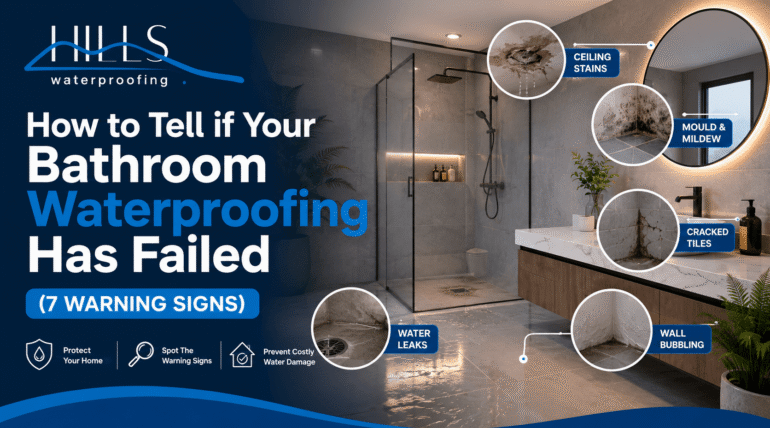
1. Water Stains on Ceilings Below
One of the most obvious signs of failed bathroom waterproofing is water staining on the ceiling beneath the bathroom.
Common signs include:
- Brown water marks
- Damp plaster
- Bubbling paint
- Sagging ceilings
This usually indicates that water has penetrated the waterproofing system and is affecting areas below.
2. Persistent Damp or Musty Smells
Bathrooms should not constantly smell damp.
If you notice:
- Musty odours
- Persistent moisture smells
- Damp air despite ventilation
Water may be trapped behind tiles, walls, or flooring due to waterproofing failure.
3. Mould and Mildew Growth
Mould is one of the most common indicators of hidden moisture.
Look for mould:
- Around skirting boards
- On walls adjacent to bathrooms
- Around shower areas
- In nearby rooms
Mould often develops long before visible leaks appear.
4. Loose, Cracked, or Hollow Tiles
Tiles may appear intact while waterproofing underneath has already failed.
Signs include:
- Cracked tiles
- Loose tiles
- Hollow-sounding tiles when tapped
- Movement underfoot
These issues often allow water to penetrate beneath the surface.
5. Bubbling Paint or Peeling Walls
Water trapped behind walls can cause:
- Paint blistering
- Bubbling plaster
- Peeling finishes
This is particularly common on walls adjacent to showers and wet areas.
6. Water Leaking Into Nearby Rooms
If water is appearing:
- In hallways
- Bedrooms
- Living areas
- Units below (apartments)
The waterproofing system may no longer be preventing water penetration.
This often leads to expensive rectification work if left untreated.
7. Efflorescence (White Powdery Deposits)
White powdery residue on grout lines, tiles, or nearby surfaces is known as efflorescence.
This occurs when moisture travels through building materials and leaves mineral deposits behind.
Efflorescence is a strong sign that water is moving where it shouldn’t be.
How Long Does Bathroom Waterproofing Last?
Properly installed bathroom waterproofing can last:
- 10–20 years in most residential properties
However, lifespan depends on:
- Installation quality
- Bathroom usage
- Structural movement
- Maintenance
Older bathrooms are more likely to experience waterproofing failure.
What Happens If Waterproofing Is Left Unrepaired?
Ignoring failed waterproofing can lead to:
Structural Damage
Water can affect timber, concrete, and structural components.
Mould Growth
Moisture creates the ideal environment for mould and mildew.
Insurance Issues
Some insurance policies may not cover damage caused by neglected waterproofing problems.
Strata Disputes
In apartment buildings, leaks often result in disputes over responsibility and repair costs.
How a Waterproofing Inspection Can Help
A professional waterproofing inspection can identify:
- The source of the leak
- Whether the waterproofing membrane has failed
- Moisture damage hidden behind surfaces
- Drainage issues
- Compliance concerns
This allows repairs to be planned correctly and prevents unnecessary costs.
Is Bathroom Waterproofing Covered by Insurance?
In many cases:
✔ Insurance may cover resulting water damage
However:
❌ Waterproofing membrane failure itself is often excluded
❌ Wear and tear may not be covered
👉 Read our guide on waterproofing insurance in Australia for more information.
How Much Does Bathroom Waterproofing Repair Cost?
Repair costs vary depending on:
- Extent of damage
- Whether tiles must be removed
- Membrane condition
- Accessibility
Minor repairs are generally far less expensive than complete bathroom rectification.
The earlier waterproofing issues are identified, the cheaper they are to fix.
How to Prevent Bathroom Waterproofing Failure
Use Licensed Waterproofing Professionals
Professional installation significantly reduces the risk of failure.
Ensure AS3740 Compliance
Bathrooms should comply with Australian waterproofing standards.
Address Small Leaks Quickly
Early repairs prevent larger structural problems.
Schedule Waterproofing Inspections
Regular inspections can identify issues before major damage occurs.
Final Thoughts
Bathroom waterproofing problems rarely improve on their own.
If you’ve noticed water stains, mould, damp smells, loose tiles, or leaks into adjoining rooms, your waterproofing system may have failed.
Early diagnosis and repair can save thousands of dollars in future damage and help protect your property from long-term moisture issues.
Need Bathroom Waterproofing Repair in Sydney?
Hills Waterproofing provides professional bathroom waterproofing inspections, leak detection, and waterproofing repairs across Sydney.
If you suspect your bathroom waterproofing has failed, contact our team today to arrange an inspection before the damage worsens.
FAQ Section
❓ What are the signs of failed bathroom waterproofing?
Common signs include water stains, mould growth, damp smells, cracked tiles, peeling paint, and leaks into adjoining rooms.
❓ How do I know if my bathroom waterproofing is leaking?
You may notice moisture damage, mould, water stains, loose tiles, or water appearing in rooms adjacent to the bathroom.
❓ Can bathroom waterproofing be repaired?
Yes. Depending on the extent of the damage, waterproofing can often be repaired or replaced to restore protection.
❓ How long does bathroom waterproofing last?
Most waterproofing systems last between 10 and 20 years when installed correctly and maintained properly.
❓ Is waterproofing required under Australian Standards?
Yes. Bathroom waterproofing must comply with AS3740, which sets minimum waterproofing requirements for domestic wet areas.
📞 Call us at 0410 570 721
📧 Email: info@hillswaterproofing.com.au
Related Services from Hills Waterproofing
CHECK OUR 5⭐ GOOGLE REVIWE
CHECK OUR 5⭐ GOOGLE REVIWE
GET A FREE QUOTATION
GET A FREE QUOTATION

